top of page

A Note to Our Readers: Our health blog sometimes features articles from third-party contributors. We share ideas and inspiration to guide your wellness journey—but remember, it’s not medical advice. If you have any health concerns or ongoing conditions, always consult your physician first before starting any new treatment, supplement, or lifestyle change.

Growing a Wellness Practice: Financial Planning Tips for Massage Therapists and Holistic Clinics

  • Writer: Monica Pineider
    Monica Pineider
  • 1 day ago
  • 8 min read
Massage clinic owner reviewing financial plans to support sustainable business growth.
Growing a successful wellness practice requires careful financial planning alongside excellent patient care.

Quick Answer


Growing a successful massage therapy or holistic healthcare practice requires more than attracting new clients. Sustainable expansion depends on strong cash flow, realistic budgeting, effective pricing and careful planning before investing in new staff, equipment or treatment rooms. By combining sound financial management with excellent patient care, wellness businesses can grow more confidently while reducing unnecessary financial risk.


Key Takeaways


✔ Build a 12-month cash flow forecast before expanding.

✔ Separate personal and business finances as early as possible.

✔ Review pricing regularly to protect profit margins.

✔ Choose funding options that match your long-term business goals.

✔ Measure growth using profitability and client retention—not just revenue.


Table of Contents


Building a successful wellness practice is about far more than delivering outstanding treatments. Whether you specialise in massage therapy, acupuncture, reflexology or multidisciplinary healthcare, long-term success depends on making informed financial decisions that support sustainable growth.


Many clinic owners naturally focus on attracting new clients, hiring therapists or expanding into larger premises. However, without careful financial planning, rapid growth can place unnecessary pressure on cash flow, staffing and profitability.


At A to Zen Therapies, we've seen first-hand that successful growth comes from balancing excellent patient care with realistic business planning. Reviewing your finances regularly, understanding your costs and planning investments carefully can help your clinic expand confidently while protecting long-term stability.


Many small businesses experience financial pressure during periods of rapid expansion. Regular cash flow forecasting, budgeting and financial reviews help identify potential risks before they affect day-to-day operations, making growth more sustainable.


Why Financial Planning Matters


Every appointment booked represents more than income.


Each treatment also involves therapist time, room availability, laundry, equipment, booking software, insurance and administrative costs.


Understanding these expenses allows clinic owners to make better decisions about pricing, recruitment and expansion.


Financial planning isn't about restricting growth—it provides the confidence to invest at the right time while maintaining healthy cash flow.


One of the biggest mistakes wellness businesses make is expanding because the diary looks busy. Sustainable growth should be based on consistent demand, realistic financial forecasting and long-term profitability rather than one particularly successful month.


Expert Tip: Before adding another treatment room or hiring a new therapist, review at least six to twelve months of booking data. Consistent demand provides a much stronger foundation for expansion than short-term seasonal increases.


Build a Cash Flow Forecast Before You Expand


A detailed cash flow forecast should be one of the first documents created before any significant investment.


Forecasting expected income alongside fixed and variable expenses helps identify periods where cash reserves may become tight.


Include costs such as:


  • Rent

  • Utilities

  • Payroll

  • National insurance or payroll taxes

  • Booking software

  • Marketing

  • Professional insurance

  • Laundry

  • Equipment

  • Treatment supplies


Updating this forecast monthly allows you to identify trends early and make informed decisions before financial challenges develop.


Well-prepared financial forecasts also strengthen loan applications by demonstrating that your clinic has a realistic plan for sustainable growth.


Massage clinic owner reviewing cash flow projections and business finances.
Regular cash flow forecasting helps wellness businesses make confident financial decisions before expanding.

Separate Personal and Business Finances Early


Many massage therapists begin their careers as self-employed practitioners, managing appointments, finances and marketing independently. While this approach may work during the early stages of a business, growth usually requires more structured financial systems.


Opening a dedicated business bank account, investing in reliable accounting software and using an efficient wellness booking system allows you to monitor appointments, income, expenses and profitability more accurately.


Simple habits can make a substantial difference:


  • Pay yourself a consistent monthly salary or owner's draw.

  • Set aside a percentage of every payment for tax obligations.

  • Review bank accounts and reconcile transactions each week.

  • Monitor income by treatment type rather than total revenue alone.


As your clinic grows, integrating clinical workflow software can also improve scheduling, patient records, communication and day-to-day operations, giving you more time to focus on delivering high-quality care.


Understanding which services generate the strongest returns helps you make better decisions about pricing, marketing and future investment.


Expert Tip: Don't assume your busiest treatment is your most profitable. A shorter treatment with lower overheads and higher demand may contribute more to your clinic's long-term profitability than longer appointments that require greater therapist time.


Explore Different Ways to Fund Your Growth


Expanding a wellness practice often requires investment before additional income begins to arrive.


Whether you're renovating treatment rooms, purchasing equipment, hiring therapists or increasing marketing activity, choosing the right funding option is an important business decision.


Many clinics initially reinvest profits into the business, while others explore financing options such as:


  • Business loans

  • Equipment finance

  • Lines of credit

  • Working capital loans

  • Merchant cash advances


For wellness clinics based in the United States, Small Business Administration (SBA) loans loans may provide longer repayment periods and competitive borrowing terms for qualifying businesses.


Delaying investments such as treatment room renovations, specialised equipment or hiring additional therapists can limit a clinic's ability to grow and meet increasing client demand. When internal cash reserves aren't enough, many business owners explore fast capital with flexible terms to fund expansion while choosing financing that supports their long-term cash flow and business goals.


Before accepting any funding, compare:


  • Interest rates

  • Repayment schedules

  • Early repayment fees

  • Cash flow impact

  • Total borrowing costs


Selecting funding that matches your clinic's long-term objectives often provides greater financial flexibility than focusing solely on obtaining capital quickly.


As your practice grows, reviewing your administrative processes is just as important as securing funding. Investing in efficient healthcare billing services can help reduce payment delays, improve cash flow and free up more time to focus on patient care and business development.


Access to finance can support sustainable business growth, but borrowing should be based on realistic financial forecasts rather than expected future demand alone. Understanding repayment commitments before taking on new debt helps reduce financial pressure during expansion.

Business owner discussing finance options for a growing wellness clinic.
Choosing the right funding option can help clinics expand sustainably while protecting long-term cash flow.

Review Your Pricing Strategy Regularly


Pricing should evolve alongside your business.


As operating costs increase, reviewing treatment prices becomes an important part of maintaining profitability without compromising service quality.


Factors worth reviewing include:


  • Rent increases

  • Therapist salaries

  • Insurance premiums

  • Professional training

  • Treatment supplies

  • Utility costs

  • Local market pricing


Many clinic owners avoid increasing prices because they worry about losing clients.


However, small, well-communicated adjustments often have far less impact on client retention than expected, particularly when accompanied by consistently high standards of care.


Rather than competing on price alone, successful wellness practices often compete on experience, expertise and patient outcomes.


Expert Tip: Instead of making large price increases every few years, consider reviewing your fees annually. Smaller, incremental adjustments are often easier for clients to accept and help your pricing keep pace with rising business costs.

Measuring Growth Beyond Revenue


Revenue is only one measure of success.


Healthy clinics also monitor indicators that reflect long-term sustainability and patient satisfaction.


Useful performance indicators include:


  • Client retention rates

  • Average spend per appointment

  • Rebooking percentage

  • Therapist utilisation

  • Cancellation and no-show rates

  • Average revenue per treatment room

  • Monthly profit margins


Monitoring these metrics provides a more complete picture of business performance than revenue alone.


Your online presence also plays an important role in sustainable growth. A professional, user-friendly website can help build trust, improve client enquiries and encourage repeat bookings. If you're reviewing your digital presence, you may also find our guide, 10 Website Essentials Every Wellness Practice Should Get Right, helpful for creating a website that supports both client experience and long-term business growth.


For example, increasing client retention by a small percentage may produce greater long-term profitability than investing heavily in acquiring new clients.


At A to Zen therapies, we've found that sustainable growth comes from building long-term relationships with clients rather than focusing solely on attracting new bookings. High-quality care, consistent service and positive client experiences often contribute more to long-term business success than rapid expansion alone.


Creating a positive client journey extends beyond financial planning and clinical care. You may also enjoy our article, How Accessible Wellness Transforms Your Clinic Experience, which explores how accessibility, thoughtful clinic design and inclusive services can improve the overall patient experience.


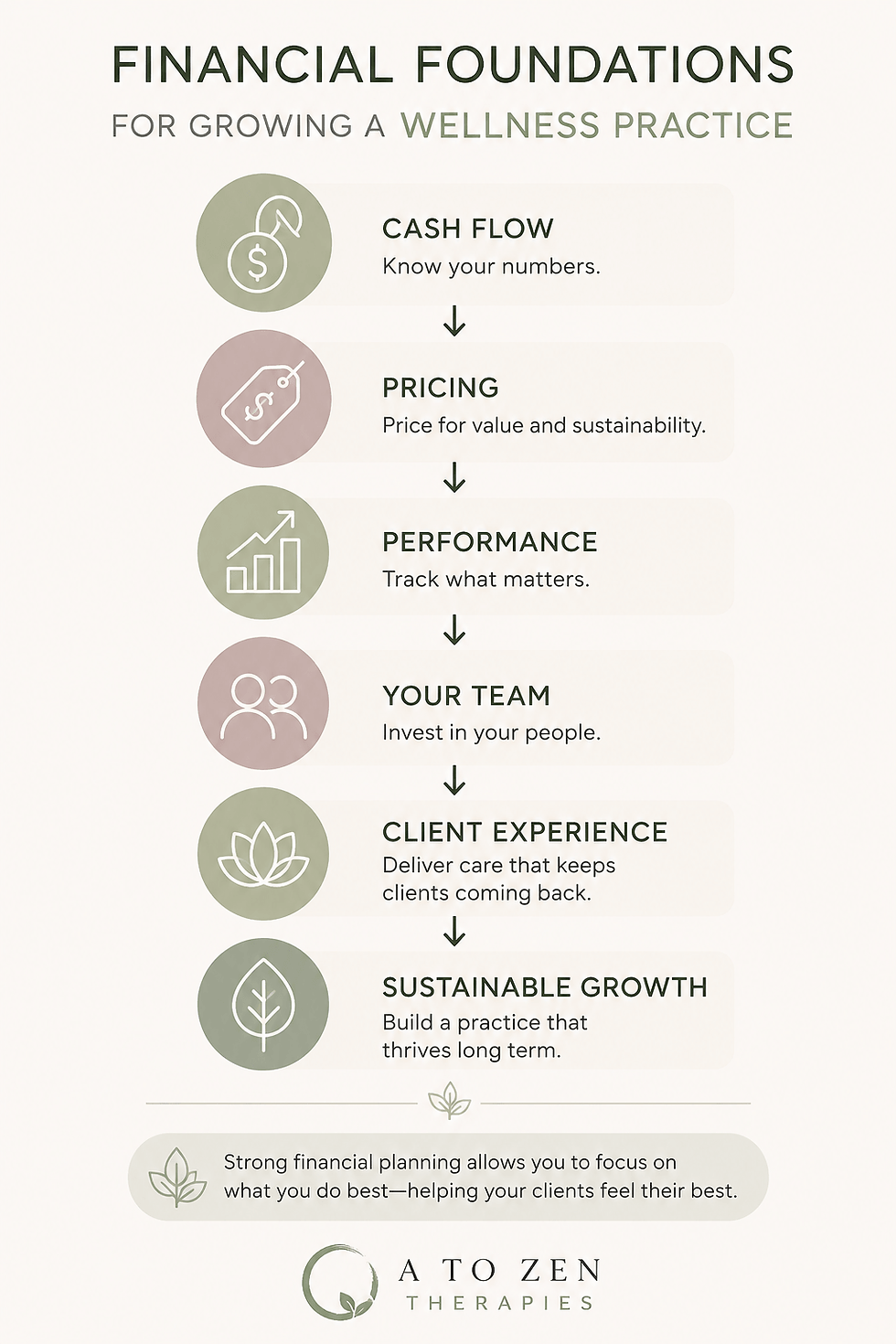
Financial Foundations for Growing a Wellness Practice


Infographic showing the key financial foundations for growing a successful wellness practice, including cash flow, pricing, business performance, team investment and long-term growth.
This infographic highlights the key financial foundations that help massage therapists and holistic clinics build sustainable, profitable practices while continuing to deliver outstanding patient care.


Common Financial Mistakes Wellness Clinics Make


Even successful clinics can experience financial challenges if growth isn't carefully managed.


Common mistakes include:


  • Expanding before demand is consistently established.

  • Underpricing treatments to compete with local businesses.

  • Failing to build an emergency cash reserve.

  • Relying heavily on one therapist or one treatment.

  • Delaying financial reviews until problems develop.

  • Investing in equipment before calculating return on investment.


Avoiding these mistakes doesn't guarantee success, but it can reduce unnecessary financial pressure and provide greater flexibility as your business evolves.


Myth vs Fact

Myth

Fact

More clients always mean more profit.

Growth only improves profitability when pricing, costs and operational efficiency remain sustainable.

Lower prices attract better long-term clients.

Many clients value quality, expertise and trust more than the lowest available price.

Cash flow and profit are the same thing.

A profitable clinic can still experience cash flow problems if income and expenses are poorly managed.

Expanding quickly is always a sign of success.

Sustainable growth is usually based on careful planning rather than rapid expansion.

Financial planning is only necessary for large clinics.

Even sole practitioners benefit from forecasting, budgeting and regular financial reviews.


Frequently Asked Questions


How often should a massage therapy business review its finances?


Reviewing key financial reports monthly allows clinic owners to monitor cash flow, profitability and business performance before small issues become larger problems.


Should massage therapists increase their prices every year?


Annual pricing reviews are generally recommended. Small, gradual adjustments often help businesses keep pace with rising operating costs while remaining competitive within the local market.


What is the biggest financial mistake new wellness businesses make?


Many businesses expand before demand is consistently established. Building healthy cash reserves and understanding long-term profitability usually provides a stronger foundation for sustainable growth.


Is cash flow more important than profit?


Both are important. A business may appear profitable on paper while still experiencing cash flow challenges if income is delayed or expenses increase unexpectedly.


Should clinic owners separate personal and business finances?


Yes. Keeping finances separate improves financial reporting, simplifies tax preparation and provides a clearer understanding of business performance.


How can wellness clinics improve profitability without seeing more clients?


Improving client retention, reviewing pricing, reducing cancellations and increasing average spend per appointment may all improve profitability without increasing workload.


How A to Zen Therapies Can Help


At A to Zen Therapies, we've spent more than a decade building and developing a successful multidisciplinary wellness practice. We understand that sustainable growth depends on balancing outstanding client care with careful financial planning, efficient clinic management and long-term business strategy.


Whether you're an independent massage therapist or managing a growing holistic clinic,

investing in strong systems, realistic financial planning and exceptional patient experiences can help create a practice that continues to thrive for years to come.


Thinking about starting or expanding your own wellness business? You may also enjoy our guide, Why Nurses Are Perfectly Positioned for a Wellness Business, which explores how clinical experience can translate into successful careers in complementary healthcare and private practice.


Evidence Behind This Article


Evidence Source

Included

Small business guidance

Financial planning principles

Professional experience

Practical business management advice

Balanced discussion of growth strategies

Last reviewed

July 2026


Continue Exploring Our Massage Therapy Hub


Running a successful clinic involves more than business planning. Explore our Massage Therapy Hub for evidence-informed articles on treatment techniques, client care, professional development and complementary healthcare to help you grow both your clinical expertise and your practice.


Why You Can Trust This Article


At A to Zen Therapies, we combine more than a decade of experience running a multidisciplinary wellness practice with evidence-informed guidance to help massage therapists and holistic healthcare professionals make confident business decisions. This article blends practical clinic management experience with recognised financial planning principles to support sustainable business growth.


References


  1. Yahoo Finance. Global Survey Finds Small Businesses Continue to Prioritise Financial Planning and Growth Strategies. Available at: https://finance.yahoo.com/small-business/articles/global-survey-finds-small-businesses-120000225.html. Accessed July 2026.

  2. Forbes Books Authors. Who Does Not Need a Financial Plan? Forbes. 24 April 2026. Available at: https://www.forbes.com/sites/forbesbooksauthors/2026/04/24/who-does-not-need-a-financial-plan/

  3. U.S. Small Business Administration (SBA). Loans. Available at: U.S. Small Business Administration – Loans. Accessed July 2026.

  4. Investopedia. Repayment: Definition and How It Works. Available at: https://www.investopedia.com/terms/r/repayment.asp. Accessed July 2026.

Recent Posts

About the Author


Monica Pineider is the author of the A to Zen Therapies health blog and founder of a Central London wellness clinic. She specialises in massage therapy and holistic treatments, drawing on professional experience since 2009 in reflexology, shiatsu, and deep tissue massage.


She trained in Thailand and Bali in traditional massage techniques before continuing advanced hands-on study in London across multiple therapy disciplines. This international and clinical background has shaped the approach and philosophy of A to Zen Therapies.


Monica oversees the editorial direction of every article published on the blog, including content written or contributed to by external specialists in areas beyond the clinic’s direct clinical experience. All content is reviewed to ensure clarity, accuracy, and alignment with our editorial standards.


She shares practical, experience-based insights to support relaxation, recovery, and everyday wellbeing.

⚠️ Medical Disclaimer


The information provided on this website is for educational and informational purposes only and is not intended as medical advice, diagnosis, or treatment.


Always seek the advice of your physician, qualified healthcare provider, or other licensed medical professional regarding any medical condition, symptoms, or treatment options. Do not disregard professional medical advice or delay seeking it because of information you have read on this website.


A to Zen Therapies and its contributors provide information for general informational purposes only and may not reflect individual medical circumstances. Individual results from wellness practices, supplements, or natural therapies may vary.


If you are pregnant, nursing, taking medication, or have a pre-existing health condition, consult a qualified healthcare professional before starting any new wellness routine, supplement, or therapy.


Use of this website and its content is at your own risk.

Editorial Note

This article has been reviewed in accordance with A to Zen Therapies’ Editorial Policy to ensure accuracy, clarity, and responsible, experience-based wellness information.

bottom of page