top of page

A Note to Our Readers: Our health blog sometimes features articles from third-party contributors. We share ideas and inspiration to guide your wellness journey—but remember, it’s not medical advice. If you have any health concerns or ongoing conditions, always consult your physician first before starting any new treatment, supplement, or lifestyle change.

Zen Habits for Better Sleep and Neck Comfort: A Holistic Guide

  • Writer: Monica Pineider
    Monica Pineider
  • Jul 3
  • 11 min read

Updated: Jul 4

Medically Reviewed by: The Clinical Team at A to Zen Therapies


Person sleeping comfortably with proper neck support to promote better sleep and neck comfort.

Quick Answer


Better sleep and lasting neck comfort depend on more than simply choosing the right pillow.


A consistent bedtime routine, healthy sleep posture, stress management and proper cervical support all work together to reduce muscle tension, improve spinal alignment and promote restorative sleep. Small changes to your nightly habits can help minimise morning stiffness while supporting your long-term physical wellbeing.


Key Takeaways


✔ Healthy bedtime routines improve sleep quality and support muscle recovery.

✔ Maintaining a neutral cervical spine position can reduce morning neck discomfort.

✔ Pillow height and sleeping posture both influence spinal alignment.

✔ Managing stress before bed helps reduce muscle tension and improve restorative sleep.

✔ Massage therapy, gentle stretching and relaxation techniques can complement healthy sleep habits.


Table of Contents


Why Neck Comfort Matters


Many people assume waking up with a stiff neck is simply part of getting older or sleeping in an awkward position. In reality, persistent morning neck pain often reflects a combination of poor sleep posture, muscle tension, inadequate pillow support and everyday stress.


During sleep, the muscles, joints and soft tissues of the neck are meant to recover from the demands of the day. When the cervical spine remains poorly aligned for several hours, surrounding muscles may remain under tension instead of relaxing. Over time, this can contribute to stiffness, headaches, reduced mobility and disrupted sleep quality.


Improving neck comfort is therefore about much more than reducing pain. Comfortable, restorative sleep supports physical recovery, concentration, mood, productivity and overall wellbeing.


Fortunately, relatively small adjustments to your bedtime routine and sleeping environment can make a meaningful difference.

Sleep quality and musculoskeletal health are closely connected. Research suggests that poor sleep and chronic musculoskeletal discomfort often influence one another. Inadequate sleep may increase pain sensitivity, while ongoing neck discomfort can make it more difficult to achieve restorative sleep. Addressing both sleep habits and physical support may therefore improve overall wellbeing.


Create a Relaxing Bedtime Routine


The hour before bed has a significant influence on how well your body prepares for sleep.

Simple habits that encourage relaxation help calm the nervous system, allowing both your mind and muscles to unwind before you fall asleep.


Consider creating a consistent evening routine that includes:


  • Dimming lights approximately one hour before bedtime.

  • Limiting mobile phones, tablets and other digital devices.

  • Reading a printed book instead of scrolling through screens.

  • Maintaining a consistent bedtime each evening.

  • Keeping your bedroom cool, quiet and comfortable.


Reducing exposure to blue light during the evening may also support your body's natural production of melatonin, helping regulate the sleep–wake cycle.


Deep Breathing Encourages Relaxation


Even a few minutes of intentional breathing can help reduce physical tension before bed.


Try inhaling slowly through your nose for four seconds, then exhaling gently for six seconds.


Repeating this cycle for five minutes may help quiet racing thoughts while encouraging your muscles to relax.


Many people also benefit from complementary therapies such as massage therapy or acupuncture, which may help reduce persistent neck and shoulder tension while supporting relaxation alongside healthy sleep habits.


If stress regularly affects your ability to sleep, explore our Mental Wellbeing Hub for additional evidence-informed strategies to improve sleep and reduce anxiety.


Person practising deep breathing or mindfulness before bedtime in a softly lit bedroom.


Choosing the Right Pillow Begins with Good Support


Even the healthiest bedtime routine cannot fully compensate for poor spinal support during sleep.


If you regularly wake with stiffness or discomfort, your pillow may no longer be providing the support your neck requires. Understanding why should you use an orthopaedic pillow for neck can help you make a more informed decision about your sleep environment.


A supportive pillow helps maintain the natural curve of the cervical spine throughout the night. Keeping the head, neck and shoulders in neutral alignment reduces unnecessary muscle activity while allowing soft tissues to recover more effectively.


However, there is no single pillow that suits everyone. The ideal choice depends on factors such as your preferred sleeping position, body shape and personal comfort.


For people who are pregnant, a pregnancy pillow may provide additional support for the back, hips and growing abdomen while encouraging comfortable side sleeping. Combined with appropriate neck support, the right pillow setup can help improve spinal alignment and reduce overnight discomfort as the body changes throughout pregnancy.


⭐ Clinical Insight


The best pillow is the one that keeps your neck in a neutral position throughout the night.


Rather than choosing the softest or most expensive option, focus on finding a pillow that maintains natural spinal alignment while supporting your preferred sleeping position.


How Your Sleeping Position Affects Neck Comfort


Your sleeping position has a significant impact on how much strain your neck and upper back experience during the night.


When the head, neck and spine remain properly aligned, muscles can relax and recover while you sleep. Poor alignment, however, forces the muscles to work continuously to support the head, often leading to stiffness, headaches and reduced mobility the following morning.


Research suggests that maintaining a neutral cervical spine position during sleep may reduce muscle strain and improve overall sleep quality. This is why both sleeping posture and pillow choice should be considered together rather than separately.


Side Sleepers


Sleeping on your side is often considered one of the most supportive positions for spinal alignment.


A pillow that is too low allows the head to tilt downward, while one that is too high pushes

the neck upward. Ideally, the pillow should comfortably fill the space between your shoulder and your head, helping keep your spine straight.


Back Sleepers


Back sleeping generally places less pressure on the cervical spine, provided the pillow supports the natural curve of the neck without pushing the head too far forward.


A medium-height pillow often provides sufficient support while allowing the neck to remain in a comfortable neutral position.


Stomach Sleepers


Sleeping on your stomach may increase rotation of the neck for several hours at a time.


For people who regularly wake with neck pain or stiffness, gradually transitioning to side or back sleeping may reduce unnecessary strain on the cervical spine.


⭐ Clinical Insight


Good posture doesn't stop when you fall asleep


Your body spends approximately one-third of its life sleeping. Maintaining healthy spinal alignment overnight is just as important as maintaining good posture while sitting or standing during the day.


Best Pillow by Sleeping Position

Sleeping Position

Recommended Support

Why It Helps

Side sleeper

Medium to higher pillow

Fills the gap between the shoulder and head to keep the spine aligned.

Back sleeper

Medium-height pillow

Supports the natural curve of the neck without pushing the head forward.

Combination sleeper

Adjustable pillow

Allows support to adapt as sleeping positions change during the night.

Stomach sleeper

Thin pillow or no pillow

Helps minimise excessive neck rotation and strain.


Illustration showing correct spinal alignment for side, back and stomach sleepers.

Choosing the Right Pillow


A supportive pillow does more than cushion your head—it helps maintain healthy spinal alignment throughout the night.


The ideal pillow varies from person to person and depends on factors such as body shape, mattress firmness and preferred sleeping position.


Your mattress also plays an important role in spinal alignment. For some people, particularly those experiencing ongoing discomfort, mattress toppers for back pain relief can improve comfort by providing additional pressure distribution and support without the need to replace the entire mattress. When combined with a supportive pillow, they may help create a more comfortable sleep environment.


Instead of focusing on a particular brand, consider three important features.


Pillow Height


The height of your pillow directly affects the position of your neck during sleep.


A pillow that is too high may force the neck into excessive flexion, while one that is too low allows the head to fall backwards or sideways. Slight shifts in elevation dictate how your muscles recover.


Several studies suggest that medium pillow heights often provide the most comfortable cervical alignment for many adults, although individual needs vary depending on body size and sleeping position.


If your pillow allows adjustable filling, small changes in height can often make a noticeable difference in comfort.


Pillow Shape


Traditional rectangular pillows may suit many people, but others benefit from ergonomic or contoured designs that better support the natural curve of the neck.


Perceived comfort changes according to your preferred sleeping position and the pillow shape you choose. A design that feels supportive for a back sleeper may not provide the same level of comfort or spinal alignment for someone who sleeps on their side.


Contoured pillows can help distribute pressure more evenly while reducing unnecessary muscle activity during sleep.


Comparing different designs can help you identify the shape that best matches your sleeping position, body shape and comfort preferences. Finding the right fit often improves support while reducing unnecessary strain on the neck during sleep.


Comfort remains highly individual, so finding the right shape may require some experimentation.


Pillow Materials


Modern pillow materials include:


  • Memory foam

  • Latex

  • Adjustable foam

  • Fibre filling

  • Feather and down

  • Hybrid ergonomic designs


Memory foam and latex tend to maintain their shape for longer than traditional fibre-filled pillows, providing more consistent support throughout the night.


Regardless of material, replacing worn pillows every one to two years helps ensure they continue providing adequate support.


The right pillow supports—but does not replace—healthy sleep habits. Research indicates that appropriate pillow height and ergonomic design may improve comfort and spinal alignment. However, lasting improvements in neck comfort are most likely when supportive bedding is combined with healthy sleep routines, stress management and regular movement.


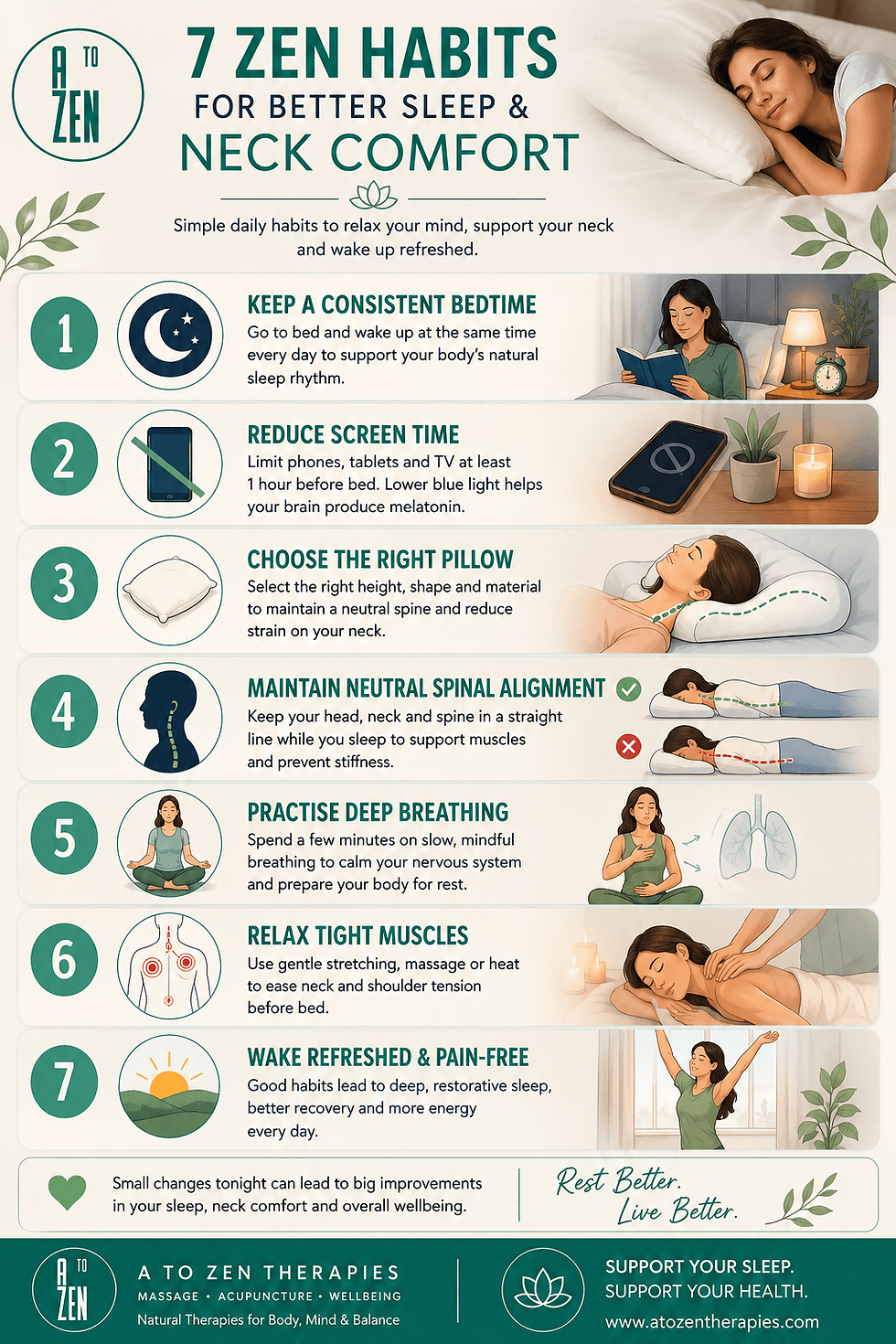
7 Zen Habits for Better Sleep & Neck Comfort


Infographic showing seven Zen habits for better sleep and neck comfort, including maintaining good sleep posture, choosing the right pillow, practising deep breathing, reducing screen time, relaxing neck muscles and supporting healthy spinal alignment.
Healthy sleep starts with consistent habits. This infographic summarises seven simple strategies—including healthy sleep posture, proper pillow support, stress management and relaxation techniques—to improve neck comfort, promote restorative sleep and reduce morning stiffness.


Gentle Evening Habits That Support Better Sleep


Creating a relaxing bedtime routine can help prepare both the body and mind for restorative sleep.


Simple habits that support better sleep include:


  • Gentle neck and shoulder stretches.

  • Reducing caffeine later in the day.

  • Keeping a consistent bedtime.

  • Limiting screen use before sleep.

  • Maintaining a cool, dark bedroom.

  • Practising mindfulness or meditation.

  • Writing in a journal to reduce mental stress.


These small habits encourage relaxation while helping reduce the physical tension that often contributes to neck discomfort.


Many people also find that regular massage therapy helps reduce persistent muscle tightness around the neck and shoulders, complementing healthy sleep habits and supporting long-term wellbeing.


Person performing gentle neck stretches before bedtime.


Manage Stress for Better Sleep and Neck Comfort


Physical and emotional stress often go hand in hand. When the mind remains active late into the evening, the muscles of the neck, shoulders and upper back may also remain tense, making it more difficult to fall asleep and wake feeling refreshed.


Chronic stress can contribute to muscle tightness, restless sleep and increased pain sensitivity. Breaking this cycle involves addressing both mental wellbeing and physical recovery.


Simple techniques that may help include:


  • Mindfulness meditation.

  • Deep breathing exercises.

  • Gentle yoga or stretching.

  • Journalling before bed.

  • Progressive muscle relaxation.


These habits encourage the nervous system to shift from a state of alertness into one of relaxation, supporting deeper, more restorative sleep.


For people experiencing persistent neck tension, complementary therapies such as massage therapy, acupuncture or guided relaxation may also help reduce muscle tightness while promoting overall wellbeing as part of a comprehensive self-care routine.


Stress and sleep influence one another. Research shows that chronic stress can negatively affect sleep quality, while poor sleep may increase emotional stress and pain sensitivity. Supporting both mental wellbeing and physical recovery often produces better long-term outcomes than focusing on either factor alone.


Supporting Healthy Neck Muscles During Sleep


Ideally, your neck muscles should remain relaxed throughout the night.


If your muscles are constantly working to compensate for poor pillow support or an awkward sleeping position, they never have the opportunity to fully recover. Over time, this may contribute to morning headaches, reduced mobility and ongoing discomfort.


Choosing a pillow that matches both your body shape and preferred sleeping position allows your muscles to remain as relaxed as possible throughout the night.


If symptoms continue despite improving your sleep environment, it may be worth consulting a healthcare professional to rule out other causes of persistent neck pain, such as cervical arthritis, nerve compression or previous injuries.


When Should You Seek Professional Advice?


Occasional neck stiffness after an unusual night's sleep is common and often improves within a few days.


However, persistent symptoms should not be ignored.


Consider seeking medical advice if you experience:


  • Neck pain lasting more than a few weeks.

  • Pain that radiates into the shoulders or arms.

  • Numbness, tingling or weakness.

  • Frequent headaches associated with neck stiffness.

  • Difficulty moving your neck.

  • Pain following an injury or fall.


Early assessment can help identify underlying causes and ensure appropriate treatment before symptoms become more persistent.


⭐ Clinical Insight


Neck pain is rarely caused by one factor alone


Most cases of persistent neck discomfort develop through a combination of muscle tension, prolonged sitting, stress, poor posture and inadequate sleep support. Addressing several contributing factors together often provides better long-term results than relying on a single solution.


Frequently Asked Questions


Can the wrong pillow cause neck pain?


Yes. A pillow that does not adequately support the natural curve of your neck may contribute

to muscle strain, stiffness and disrupted sleep.


How often should I replace my pillow?


Most pillows should be replaced every one to two years, depending on the material and how well they maintain their shape and support.


Is memory foam better than a traditional pillow?


Memory foam provides consistent support for many people, but the best pillow depends on your sleeping position, body shape and personal comfort preferences.


Can stress cause neck pain?


Yes. Emotional stress often increases muscle tension in the neck and shoulders, contributing to stiffness, headaches and poor sleep quality.


Can massage therapy help neck tension?


Massage therapy may help reduce muscle tightness, improve circulation and encourage relaxation. Many people include massage as part of a broader strategy that also includes posture correction, exercise and healthy sleep habits.


Does an orthopaedic pillow cure neck pain?


No. While a supportive pillow may improve spinal alignment and reduce overnight muscle strain, lasting improvement usually involves a combination of good sleep habits, posture, stress management and, when appropriate, professional assessment.


Final Thoughts


Achieving better sleep and lasting neck comfort involves much more than purchasing a new pillow.


Healthy bedtime habits, proper sleeping posture, effective stress management and supportive bedding all work together to help your body recover overnight. Small, consistent improvements to your evening routine can reduce morning stiffness, improve sleep quality and support long-term spinal health.


Rather than searching for a single solution, focus on building sustainable habits that encourage both physical comfort and emotional wellbeing. Over time, these simple changes can make a meaningful difference to how you sleep—and how you feel throughout the day.


Continue Exploring Better Sleep and Pain Relief


If you'd like to learn more about improving sleep, reducing muscular tension and supporting long-term wellbeing, explore our Pain Management Hub, Massage Therapy Hub and Mental Wellbeing Hub for more evidence-informed advice.


Editorial Policy


At A to Zen Therapies, we believe restorative sleep is an essential part of overall health and wellbeing. Our evidence-informed articles combine current research with practical self-care strategies to help readers improve sleep quality, reduce musculoskeletal discomfort and make informed decisions about their health. Every article follows our Editorial Policy.


References


  1. Li Y, et al. The Relationship Between Pillow Design, Cervical Spine Alignment and Sleep Quality: A Systematic Review. Journal of Orthopaedic Surgery and Research. 2024. Available at: https://pubmed.ncbi.nlm.nih.gov/38809241/ — Reviews current evidence on pillow characteristics, cervical spine alignment and their effects on neck comfort, pain and sleep quality.

  2. Healthline. Muscle Weakness: Causes, Symptoms and Treatment. Available at: https://www.healthline.com/health/muscle-weakness#treatment — Reviews common causes of muscle weakness, when to seek medical advice and treatment approaches, highlighting the importance of identifying underlying musculoskeletal or neurological conditions when symptoms persist.

  3. Superpower. How Many Pillows Should You Sleep On? Available at: https://superpower.com/guides/how-many-pillows-should-you-sleep-on — Discusses how the number and positioning of pillows can influence sleeping posture, spinal alignment and overall sleep comfort based on individual sleeping positions.

  4. Homes & Gardens. Interior Design Trends. Available at: https://www.homesandgardens.com/interior-design/interior-design-trends — Explores bedroom design trends that promote a calm, comfortable and relaxing sleep environment, including colour palettes, lighting and minimalist décor that may support healthy sleep habits.

  5. House & Garden. Popular Design Details for 2025. Available at: https://www.houseandgarden.co.uk/article/popular-design-details-2025 — Highlights contemporary bedroom design ideas that encourage comfort, relaxation and wellbeing by creating peaceful, restorative living spaces.

  6. Kim J, et al. Sleep, Musculoskeletal Pain and Overall Health: A Review of Current Evidence. Available at: https://pmc.ncbi.nlm.nih.gov/articles/PMC8544534/ — Reviews the bidirectional relationship between sleep quality and musculoskeletal pain, emphasising how improving sleep habits may support pain management and overall physical wellbeing.

  7. Forlini V. The Influence of Pillow Design on Cervical Spine Alignment and Sleep Comfort. University of Padua Master's Thesis. Available at: https://thesis.unipd.it/retrieve/2cbb97d1-81c1-4459-a707-fcf3e5f2cb2e/Forlini_Virginia.pdf — Examines how pillow height, shape and ergonomic design influence cervical alignment, muscle activity and perceived comfort during sleep.


Recent Posts

About the Author


Monica Pineider is the author of the A to Zen Therapies health blog and founder of a Central London wellness clinic. She specialises in massage therapy and holistic treatments, drawing on professional experience since 2009 in reflexology, shiatsu, and deep tissue massage.


She trained in Thailand and Bali in traditional massage techniques before continuing advanced hands-on study in London across multiple therapy disciplines. This international and clinical background has shaped the approach and philosophy of A to Zen Therapies.


Monica oversees the editorial direction of every article published on the blog, including content written or contributed to by external specialists in areas beyond the clinic’s direct clinical experience. All content is reviewed to ensure clarity, accuracy, and alignment with our editorial standards.


She shares practical, experience-based insights to support relaxation, recovery, and everyday wellbeing.

⚠️ Medical Disclaimer


The information provided on this website is for educational and informational purposes only and is not intended as medical advice, diagnosis, or treatment.


Always seek the advice of your physician, qualified healthcare provider, or other licensed medical professional regarding any medical condition, symptoms, or treatment options. Do not disregard professional medical advice or delay seeking it because of information you have read on this website.


A to Zen Therapies and its contributors provide information for general informational purposes only and may not reflect individual medical circumstances. Individual results from wellness practices, supplements, or natural therapies may vary.


If you are pregnant, nursing, taking medication, or have a pre-existing health condition, consult a qualified healthcare professional before starting any new wellness routine, supplement, or therapy.


Use of this website and its content is at your own risk.

Editorial Note

This article has been reviewed in accordance with A to Zen Therapies’ Editorial Policy to ensure accuracy, clarity, and responsible, experience-based wellness information.

bottom of page