top of page

A Note to Our Readers: Our health blog sometimes features articles from third-party contributors. We share ideas and inspiration to guide your wellness journey—but remember, it’s not medical advice. If you have any health concerns or ongoing conditions, always consult your physician first before starting any new treatment, supplement, or lifestyle change.

Cybersecurity in Healthcare Apps: Threats You Can't Ignore in 2026

  • Writer: Monica Pineider
    Monica Pineider
  • Feb 26
  • 6 min read

Medicine now has healthcare apps as an essential element. They view patients remotely, process prescriptions and store electronic health records. They handle massive volumes of personal information on a daily basis. As digital reliance grows, so do the risks, and in 2026 the threat landscape is more complex and more dangerous than ever, making healthcare app security a strategic priority rather than a technical afterthought, especially for organizations that want to see how it works in practice.


A data breach may endanger not only wealth but also life. This is the reason why developers, admins, and health organizations are obliged to observe HIPAA and high-quality data security. Beginning with a robust security construct and you will find out how it goes.


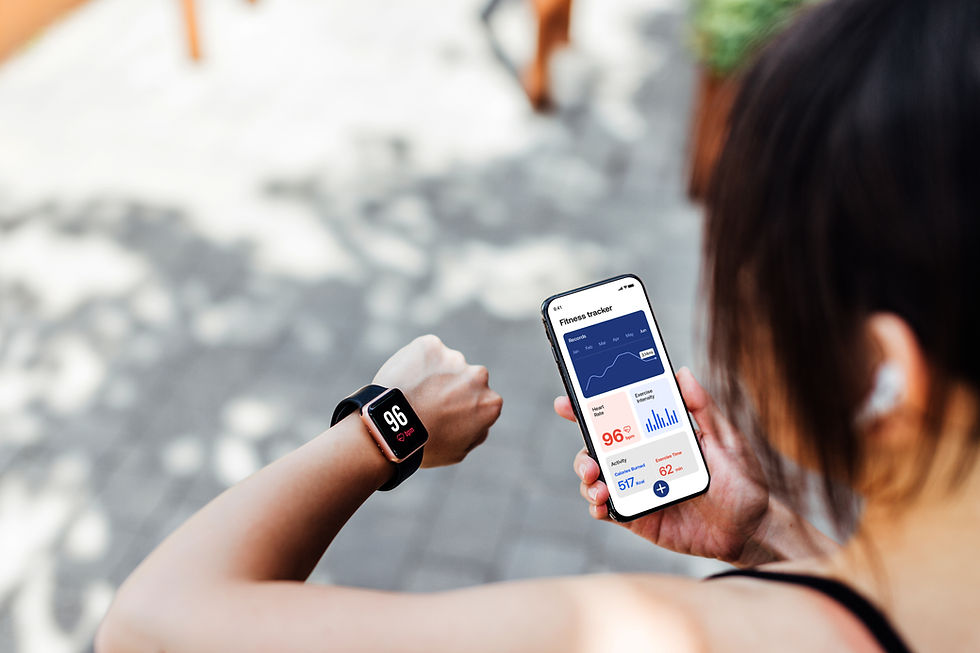
Woman monitoring her heart rate on a smartwatch and smartphone outdoors, highlighting healthcare app security in tracking personal fitness data.

The Reason Healthcare Apps Are Prime Targets


The health sector is an industry that has been one of the most assaulted ones. This is because medical data is quite valuable. A single patient record may contain insurance data, social security, drug records, funds, and other personal information. This record would fetch much more money in the black market than a stolen credit card number that can be cancelled within a short period of time.


Health organizations are also susceptible by definition. Most of them use outdated systems, lack funds to invest in IT security, and employees trained on clinical care, as opposed to digital safety. Simply to patch themselves, hospitals cannot afford to simply close down.


They will need to continue running when it is so difficult to maintain online presence. The combination of selling high and hard defence makes them a good target.


The Threats to Healthcare Apps Security in 2026

Clinical Systems are the targets of Ransomware Attacks


Ransom is the largest threat to health organizations all over the world.


Ransomware attacks on hospital applications can disrupt or halt patient treatment compared to attacks of retail or finance. It is able to postpone surgeries, lock medication records, as well as compel the staff to use paper at poor moments.


These attacks are more advanced in 2026. When attackers are successfully breaching a network, they can remain in it and cause as much harm as possible within weeks.


The contemporary ransomware groups also perform the duo extortion: restrain the data and threaten to release them, in case of no ransom. This imposes colossal legal and reputational burden on top of operational crisis on the providers who are subjected to strict data rules.


Insecure APIs and Third-Party Integrations


Health apps do not work very much alone. They communicate with laboratory devices, health insurance systems, pharmacy medication records, wearables and telehealth portals.


Each connection possibility is an attack surface. The weakest point in modern health software is an intervention that is poorly secured API interfaces allowing various software to communicate.


When the attacker learns about an inadequately boxed API or ineffective authentication, they will be able to grab a significant amount of patient information without any alerts. With a wider data dissemination among providers due to the interoperability regulations, more and more APIs are exposed, and they need to be secured as soon as possible.


To improve their digital base, organizations that prefer to rely on healthcare app security standards often do so by establishing the defense, at the outset.


Phishing and Social Engineering


Despite numerous sensitization efforts, phishing is still one of the most effective techniques of targeting health organizations. Clinical personnel have limited time, they are in dire stress and might not think about security.


An email in a format of a message, supposedly sent by a hospital administrator, a pharmaceutical supplier or the government system can fool even the experienced workers to enter their passwords or to press some suspicious buttons.


AI-generated phishing can be significantly improved in 2026. Messages are grammatically flawless, contextually appropriate, and occasionally customised with Linked In information or personnel data-banks.


Targeting certain individuals, such as the system administrators or data managers, spear-phishing has become standard and quite persuasive, and training does not suffice.


Mobile Vulnerabilities and Healthcare App Security Gaps


The development of mobile health applications among both patients and health professionals has increased the attack surface to billions of personal devices. These applications are in most cases hastily developed with the security coming after the application and not before the application development. Weak data encryption, insecure local storage, unsafe log-ins, and poor session management are also frequent issues.


A patella app may appear to be less critical than a hospital backbone system, however, patient apps can provide a point of entry into larger networks. After an attacker has gained access through one of the mobile applications, it is a documented threat to migrate into interconnected clinical systems.


Insider Threats and Privilege Misuse


Outsourcing all violations is not necessarily external. Most of the incidents are the result of insider threats that could be bad intent, carelessness or accident. The routing of health workers to sensitive records is the normal operations and therefore, it is more difficult to detect abnormal access as compared to companies where the strict lines of control are more stringent.


Misuse in healthcare app security may be as simple as an employee who is curious about

the work environment accessing information related to a high-profile patient and either stealing it or simply viewing it without authorization. These occurrences remain unnoticed in months without effective monitoring, behavioral analysis and strict roles access.


Laws and Regulatory Pressures Influencing Security Practices


Health apps developers and providers have to operate via a complicated system of rules. In the United States, HIPAA establishes the lowest possible standard of protection, whereas 21st Century Cures Act promotes openness, which at other times may conflict with security.


Here, GDPR requires that the health data of EU residents must be taken precautionary care in Europe, and in case of severe violations, the penalty is possible to amount to tens of millions of euros.


Regulators in most locations are also scrutinizing software vendors closely, in terms of security of software that processors sell them in the year 2026. Supply-chain security: ensuring that third-party components of a supply chain are of good quality has been a major compliance issue following a series of high-profile breaches where a single compromised vendor has entered dozens of downstream clients.


Introduction to Building Security into Healthcare Apps: Principles


Shift-Left Security Development


The most effective approach to reducing vulnerabilities is to design security in the initial stages rather than correcting the vulnerabilities during the latter stages. This approach of shift-left implies threat modeling in the design status, automated security testing during the code creation, and code security reviews before the code is deployed. The teams that engage in this style create more robust software with minimal critical bugs upon release.


Zero Trust Architecture


The traditional method of believing everything within a corporate perimeter does not apply

to the health IT in modern times. Now users have access to systems at the hospital, clinic, home offices and phones. Zero trust presupposes that no one, device, and systems will be trusted under a default condition regardless of their location. All the requests are checked, recorded and granted with consideration to identity, health of the device, and context.


In any case, organizations that have numerous applications and networks to integrate with, zero trust helps mitigate the harm that may occur when a single credential is stolen or when a single computer or device is compromised.


Encryption, Data Minimization, and Modern Healthcare App Security Standards


Any health app must encrypt the data when in transit and rest. Encryption is not the solution.


The reduction in the value of the stolen data is decreased by data minimization, which is the accumulation and retention of only the amount of information required by a purpose. Less sensitive organizations are not so desirable as targets and have less regulatory risk in the occurrence of breaches.


Continuous Monitoring and Incident Response Planning


Health organizations need to become aware of suspicious actions within a short period and act decisively. Ongoing scrutiny using security information and event management, behavioral analytics allow the teams to identify suspicious trends in advance before they turn into complete breaches. An incident response plan is also important which is practiced with name of roles, communication steps, and recovery actions to be taken. The speed and quality of response in health can have a direct impact on patient safety.


The Road Ahead


Health cybersecurity is not a problem addressed once. Critters continue to evolve the threat environment, becoming smarter, increasing attack surfaces, and continuously digitizing the clinical environment. By 2026, the individuals who consider treating security as an operation discipline rather than a control measure, stand in the best position to secure patient, staff, their future too.


To builders or managers of health apps, the message is clear: security spending is not an additional work. It belongs itself to the patient care system. Each patched gap, more stringent access security and employee training is a part of the safety and trust that health has never been without. The wager is greater than ever, and the means of accomplishing it are more accessible than ever. The remaining thing is the promise to pay them with deeds.

Recent Posts

bottom of page