top of page

A Note to Our Readers: Our health blog sometimes features articles from third-party contributors. We share ideas and inspiration to guide your wellness journey—but remember, it’s not medical advice. If you have any health concerns or ongoing conditions, always consult your physician first before starting any new treatment, supplement, or lifestyle change.

How to Manage Swollen Feet During Pregnancy Between Prenatal Massage Sessions

  • Writer: Monica Pineider
    Monica Pineider
  • 52 minutes ago
  • 6 min read

If you've experienced swollen feet during pregnancy and you've been in for massage during your pregnancy, you'll know how much better it can make you feel. The weight in your legs goes away. The feeling of being heavy in the legs fades away. Your ankles are as normal as your ankles! You leave feeling lighter than you have in weeks!


Swollen Feet During Pregnancy shown as a person in teal leggings and patterned socks resting one bare foot on a teal pillow, highlighting mild swelling in the foot under soft natural light with a blurred plant in the background.

However, a couple days later, things change. The next visit is still to come. The swelling begins to increase by mid afternoon.


This is the normal thing to happen.


Weekly changes in the body cause the swelling of pregnancy, or oedema. Massage will be beneficial, but the most effective results come from using it as a daily practice.


Golden points to remember will be that the things you can carry out amongst sessions can

greatly prolong the effects of treatment. These are the methods most frequently suggested in clinic to aid circulation and to drain fluid.


What causes swollen feet during pregnancy?


There are two major physiological changes that cause pregnancy swelling.


During pregnancy there is an increase in blood volume of approximately 30-50%. This adds a load to the venous system, especially the lower parts of the body.


Secondly, the expanded uterus may squeeze the inferior vena cava, the large vein that carries blood from the legs back to the heart. This decreases the effectiveness of the veins and leads to accumulation of fluid in the feet, ankles, and calves.


Pregnant woman illustration shows venous return affected by the uterus compressing the inferior vena cava. Diagram highlights blood flow changes.

Hormonal shifts are a factor as well. Progesterone and relaxin make the blood vessels more elastic. It is essential during pregnancy and birth, but makes it slightly more difficult for veins to pump blood up the hill.


These factors may overload the lymphatic system, so involved in draining excess fluids.


Our pregnancy massage in London uses therapeutic body work and lymphatic drainage methods that encourage venous return and the flow of fluid.


But in-clinic treatment can only be a snapshot, however. Fluid pressure in the body is continuously regulated, and proper monitoring and care at home are therefore of immense importance.


Between-session strategies that genuinely help to reduce swollen feet during pregnancy


These are approaches that we see most regularly improve comfort with our clients in clinic.


As long as they are not sudden, severe or unusual they should be safe for most healthy pregnancies, but always consult your midwife or GP if swelling becomes sudden, severe or unusual.


Compression socks: portable circulatory support


Striped compression socks in pastel colors on a wooden table. Text highlights their consistent venous support, effective when worn in the morning.

One of the best ways to deal with daily swelling during pregnancy is to wear compression socks.


The work is done through a light push at the anklebone that then eases up the leg. This aids veins return blood to the heart and also assists keep fluid from accumulating.


Most pregnant women can start with compression between 15-20 mmHg. It's stiff and fits well for day and night use.


For women who have more prominent swelling, it may be helpful to have 20-30 mmHg, but it is advisable to discuss this with a GP and/or midwife.


Proper fit matters. It must be graduated (tight at the anklebones and loose at the upper end). Lack of variety in the tightness of socks can impede circulation, not help.


In clinic experience, the most effective routine is:


  • Place them in the morning (first thing).

  • Prior to the onset of swelling (before it gets worse)

  • Wear during working time or traveling


Vim & Vigr's compression socks for pregnancy use especially for women spending long hours at a desk or on their feet in the city, they do not have to hide under trousers makes a real difference to whether you actually wear them every day.


Gentle self-massage for lymphatic support


Woman in cozy attire sitting on a mat, gently massaging her leg. Calm room with earthy tones, pottery, and text about self-massage benefits.

To keep the effects of lymphatic drainage for swollen feet during pregnancy, simple self-massage can be performed between sessions.


The key is pressure: lighter than most people expect. The lymphatic system is closest to the surface of the skin and is most effective when stimulated by gentle rhythmic movement.


Elevate legs and sweep gently from ankles to knees, always raising towards the heart with flat hands.


Do 2-3 minutes of each leg in the evening.


This is beneficial in our practice as a maintenance technique, not as a treatment, in our experience. It is not about pushing hard, it's consistency.


Kids love this as it's so easy to do!


Leg elevation: simple but highly effective


One of the most neglected but important tools for swollen feet during pregnancy and pregnancy oedema is elevation.


If the legs are above the heart, the return of blood to the heart is aided by gravity and pressure in the lower limbs is lowered.


Heaviness will be reduced significantly in just a few times of the day, even after just 15–20 minutes.


Lying on left side with legs elevated above the hips is the best position. This also means there is no compression of the inferior vena cava later in pregnancy.


A foot rest can also be useful if you have to sit all day at a desk, as it helps to minimise lower leg dependency.


Light daily exercise, done in a relaxed manner


One of the most frequently mentioned causes of swelling is sitting or standing for too long.


The calf muscles (muscles of the lower leg) are a "pump" for circulation. They contract and aid the return of blood to the heart. This mechanism slows down when you are at rest.


Short and frequent periods of exercise work better than one long walk in clinic experience.


Helpful habits include:


  • Standing every 30–45 minutes

  • Take a stroll to get the blood pumping.

  • Gentle calf raises or circles at the ankles

  • Morning and evening (if there is energy) is a short walk.

  • Hydration is a key aspect of fluid balance.


Hydration: essential for fluid balance


When the body is under-hydrated, fluid regulation is impaired, leading to increased water retention and worsening tissue swelling, including swollen feet during pregnancy.


Good water intake helps to keep the kidneys performing well and helps to maintain balance in the body's fluids.


Most pregnant women require 8-10 glasses per day of water, depending on climate, activity and medical advice.


Limit excess sodium intake to help decrease swelling.


When to consider lymphatic drainage pregnancy massage for swollen feet


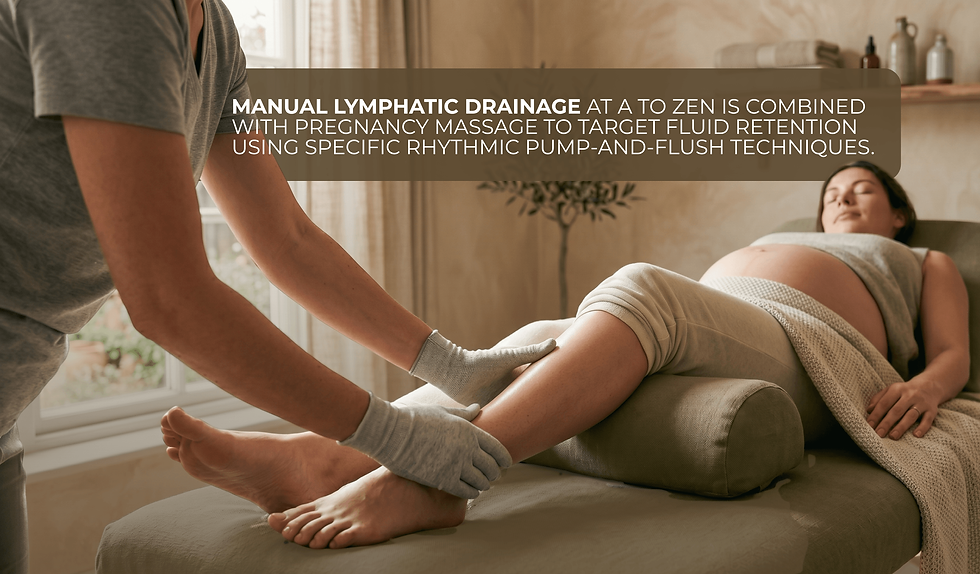
Person performs lymphatic drainage on a pregnant woman's legs in a calm room. Text highlights pregnancy massage benefits and techniques.

Do use lymphatic drainage massage when you have pain, swollen lymph nodes or pain in the lymphatics.


Manual lymphatic drainage (MLD) may be beneficial when the swelling persists and is uncomfortable.


This is a technique that's clinically recognised and has been used to stimulate the lymphatic system and help the body shed fluids by using light precise movements. It has a different pressure and different purpose as compared to normal massage.


Lymphatic drainage massage is also part of a pregnancy massage at A to Zen Therapies, depending on the individual requirements, especially during the third trimester of pregnancy as well as after prolonged stay in standing position, travel and even work.


Clients often experienced most relief in clinic experience when treatment was scheduled during their times of increased swelling rather than leaving it too long between treatments.


Making the most of care between sessions


Prenatal massage is most effective when used in conjunction with daily strategies for support.


The combination of:


  • Regular massage sessions

  • Can wear compression stockings when awake.

  • Gentle evening self-massage

  • Frequent movement

  • Hydration

  • Periodic elevation


Builds a uniform support for blood flow during pregnancy.


Knowing the right time to visit your therapist is important if you don't know what will work for you best in your stage of pregnancy, your therapist will guide you at your next visit or before arranging for a new patient.


When to seek medical advice


Some swelling in pregnancy is normal, but the following signs should always be evaluated immediately.


If you suffer from any of these, visit a doctor:


  • Rapid changes in leg size in one leg.

  • Inflammation – capacity to swell, become painful, or become warm.

  • Increased facemask and hand size

  • Headache or vision changes and swelling


These symptoms may require medical assessment to rule out conditions such as pre-eclampsia or deep vein thrombosis.


Author's Note


A to Zen Therapies is a specialist massage clinic focused on pregnancy, postpartum recovery, and women’s wellness. Our therapists are trained in prenatal massage and lymphatic drainage techniques designed to support comfort, circulation, and relaxation throughout pregnancy.


We work with clients at all stages of pregnancy, combining clinical understanding with hands-on therapeutic experience to provide safe and effective care.


Sources


Recent Posts

About the Author

Monica is a health and wellness enthusiast and the founder of A to Zen Therapies, a wellness clinic in the City of London serving busy corporate clients. Her experience helping high-stress professionals gives her expertise in supporting demanding lifestyles with holistic care.


She specializes in integrative health, combining traditional approaches with supplements, herbal support, and natural therapies, and is particularly keen on women’s health and long-term well-being.


As a mother of two, she is passionate about children’s health, and as a fitness lover and lifelong learner, she continuously explores new therapies and wellness trends to provide clear, practical, and trustworthy health insights.

bottom of page