
top of page

A Note to Our Readers: Our health blog sometimes features articles from third-party contributors. We share ideas and inspiration to guide your wellness journey—but remember, it’s not medical advice. If you have any health concerns or ongoing conditions, always consult your physician first before starting any new treatment, supplement, or lifestyle change.

A Senior Wellness Guide to Managing Joint Stiffness

  • Writer: Monica Pineider
    Monica Pineider
  • 9 hours ago
  • 3 min read

The topic of independence evolves with age, as mobility issues such as balance, limited range of motion, and nighttime wandering become more prevalent. Everything from joint exercises to round-the-clock care should be part of the conversation.  In our work with older adults, we often see joint stiffness appear before more serious mobility issues. Early support can make a significant difference in maintaining independence.


Elderly person in a red striped shirt joyfully raises arms on a cloudy beach, smiling widely. Waves and sand visible in the background.

Stiff joints in seniors are an early indicator of mobility changes. 


Synovial fluid levels naturally decrease with age, leaving less "oil" to lubricate aging joints.

This process, combined with age-related muscle loss (sarcopenia), increases joint strain and reduces stability over time.


Along with natural muscle atrophy, seniors are also at risk of developing osteoarthritis, a degenerative joint disease that causes significant cartilage loss.         


Yet, engaging in gentle exercises, applying heat therapy, and mindful walking can make a noticeable difference. 


Signs a Senior Needs Live-In Care


When addressing senior mobility health, avoid any activities that can put undue stress on senior joints. Always talk to a doctor before introducing an exercise routine, even a gentle one. This is especially important for seniors with chronic conditions, recent surgeries, or a history of falls.


Assess the situation to see if live-in care is needed. Watch closely for the following mobility signs:


  • Severe balance issues

  • Nighttime wandering

  • Being prone to slips and falls 

  • Challenges with mobility devices


Research how live-in care supports aging in place, including increased safety measures for seniors returning home from joint surgeries. Talk to a doctor about your findings and next steps. 


Once a doctor rules out severe mobility issues and gives you the green light, go ahead and introduce the following senior-friendly exercises. 


1. Gentle Chair-Based Exercises for Joint Stiffness


In practice, we recommend starting with low-impact, seated exercises to reduce injury risk while building confidence.


Begin every exercise routine with a gentle 10-minute warm-up to "wake up" the nervous system and promote healthy blood flow to the muscles. Warm-ups are essential to preventing cramping and fatigue. 


For the first exercise, ask seniors to sit in a chair with their backs straight. Instruct them to march their feet in place to engage the hip flexors. 


Guide seniors through simple shoulder rolls to release neck tension, starting with 5 forward rolls followed by 5 back rolls, according to Harvard Health. Next, lead a gentle wrist and ankle circle exercise to improve seniors' distal circulation.


Have seniors cross their arms and gently rotate their spines to stretch the core. This will help them arch and round their backs to condition the vertebral column.


2. Heat Therapy and Exercise


Heat therapy is commonly used in physiotherapy to improve circulation and prepare joints for movement.


Applying heat therapy for 15 minutes can help improve aging joint elasticity before stretching. After warming up a towel or heating pad, seniors should apply heat to areas most prone to stiffness, like knees and hips.


Heat therapy can also be used in combination with mobility exercises. 


Show seniors how to apply heat while performing a seated hamstring stretch, gently leaning forward with one leg extended. These senior exercises help reduce lower back pain from pelvic misalignment.   


3. Self-Massage Tips for Seniors's Joint Stiffness


Self-massage can help seniors manage joint discomfort, which allows for more regular exercise.


Identify acupressure points where seniors can reduce local tension. Acupressure also improves sleep quality and muscle recovery, according to the American Institute of Alternative Medicine


Acupressure points to know: 

  • ST-36 (below the kneecap)

  • SP-9 (below the inner knee)

  • BL-40 (behind the knee crease)


These acupressure points can help to relieve leg pain, boost energy, manage swelling, and reduce stiffness in the knees and lower back. 


While helpful for some individuals, these techniques should be used as a complementary approach rather than a replacement for medical care.


4. Mindful Walking


Many seniors feel hesitant when restarting movement, so gradual progression and reassurance are key.


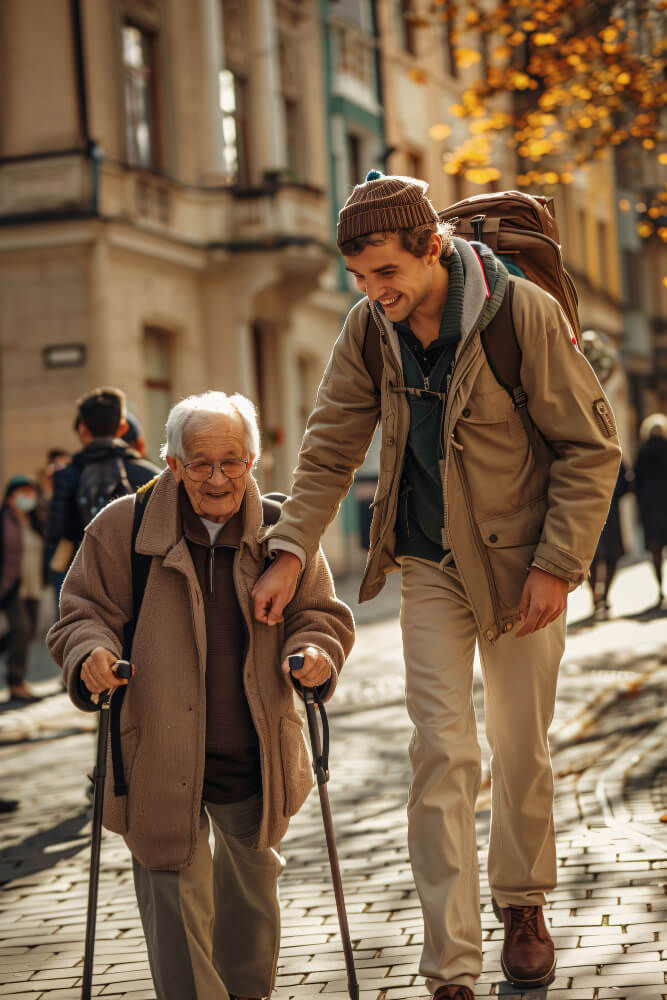
Reintroduce seniors to walking with a flat looped path. Don't hesitate to bring trekking poles to ensure stability.


Begin with heel-to-toe walking, encouraging seniors to focus on the roll of their foot. Start with 10-minute sessions while gradually increasing the time for more active seniors. 


Encourage seniors to be intentional about their walking by focusing on the fresh air, sounds

of nature, and the vibrant colors of the neighborhood.  


Restore Mobility and Independence even with Joint Stiffness


From a wellness perspective, consistent daily habits and early intervention are the most effective ways to maintain long-term mobility.


Helping seniors restore their mobility is a wonderful gift to share.


Create a routine that includes warm-ups, chair exercises, heat therapy, and acupressure. Of course, clear everything with a doctor first, and assess for live-in care. 


Develop your senior wellness approach with new exercises and mindful activities. Follow our blog for more!


Sources


  1. Harvard Health Publishing. (2024). Practical tips and simple exercises to prevent neck pain. https://www.health.harvard.edu/pain/practical-tips-and-simple-exercises-to-prevent-neck-pain 


  1. American Institute of Alternative Medicine. (2024). Acupressure benefits. https://www.aiam.edu/acupuncture/acupressure-benefits/

Recent Posts

About the Author

Monica is a health and wellness enthusiast and the founder of A to Zen Therapies, a wellness clinic in the City of London serving busy corporate clients. Her experience helping high-stress professionals gives her expertise in supporting demanding lifestyles with holistic care.


She specializes in integrative health, combining traditional approaches with supplements, herbal support, and natural therapies, and is particularly keen on women’s health and long-term well-being.


As a mother of two, she is passionate about children’s health, and as a fitness lover and lifelong learner, she continuously explores new therapies and wellness trends to provide clear, practical, and trustworthy health insights.

bottom of page